Revenue Planning
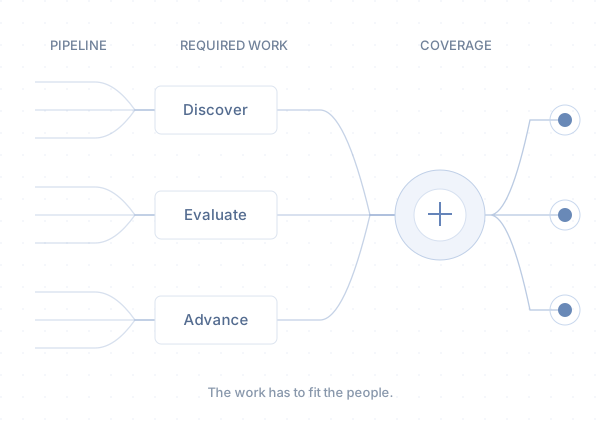
Connect the bookings target to pipeline, conversion assumptions, and the selling work required.
SALES APPLICATIONS
Bring the bookings plan, selling effort, and available people into the same review. See whether the next move is more pipeline, more capacity, or a better allocation of work.
Does it support the target?
Can the team do the work?
Is the right person carrying it?
The decision in focus
The same four-week window shows 360 hours of selling work and 380 hours of effective capacity. But Maya has 110 hours of work and only 100 hours available.
0–120% workload · vertical mark = effective capacity
Protect the strategic relationship. Confirm territory fit, weekly capacity, and ownership and commission-credit approval. Both sellers’ handover effort is included.
Moving 12 hours of Riverton’s validation into the next period brings Maya to 98 / 100 hours overall. Week 1 still needs 29 hours against 25 available. Recheck the timing, not just the total.
SALES PORTFOLIO
Is the constraint the pipeline—or who is carrying it?
Connect the bookings target to pipeline, conversion assumptions, and the selling work required.
Turn opportunity demand into workload. Compare it with available seller hours, including ramp and leave.
View exampleCompare ownership alternatives against territory fit, relationship continuity, and receiving capacity.
Bring material deal risks into review with their evidence, accountable owner, and decision boundary.
A shared operating basis
A team average can hide a local constraint. Keep the selling work, the account relationship, and the rules behind the proposed move in view.
Explore the platformThe first useful review
One team. One planning window. A review your Sales, RevOps, and Finance leaders can inspect.

Welcome back
Sign in to continue to your operating workspace.
OpX access
Your account has access to more than one OpX workspace.
Choose one operating problem. We'll take it from there.
I will follow up directly to understand the operating problem and whether OpX is a fit for a first engagement.
First deployment
One operating question. One sponsor. The minimum authorized source package required to evaluate it.
Explore applications