The OpX philosophy
Context should outlive the moment.
A company should not have to reconstruct what it already learned. The evidence, judgment, and outcomes behind a decision belong to the operation.

01 / Context
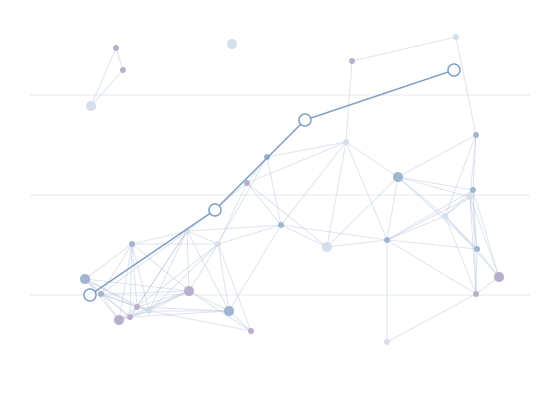
The business happens between the boxes.
An account lives in the CRM. Its delivery plan lives somewhere else. The people doing the work have a different view again.
Summaries travel up the hierarchy. The relationships that explain the situation often do not.
Keep the connections, not just the records.
02 / Operators
Someone on your team is already holding the whole picture.
They know which customer commitment depends on which person. They spot the conflict before it appears in a report. They remember why the last decision was made.
That knowledge is valuable. Keeping it only in someone’s head makes the company fragile.
Give human judgment a durable place to live.
03 / Patterns
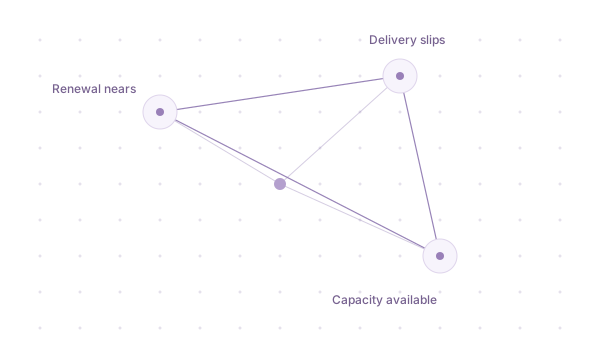
A fact is a point. A situation is a pattern.
A renewal date alone tells you when. A delivery delay tells you something else. Together, they can change the decision.
Make the pattern explicit: which facts matter together, under which conditions, and with what limits.
Recognition should be repeatable.
04 / Judgment
An answer is not the whole decision.
What was known, how it was interpreted, what was chosen, and what happened are different things.
Keep them distinct. Keep them connected. A recommendation should explain its basis without pretending to grant authority.
The reasoning stays visible. People retain authority.
- Evidence
- What was known
- Judgment
- What it meant
- Decision
- What was chosen
- Outcome
- What happened
05 / Memory
Leave more than an answer behind.
Every reviewed situation can add to a record the next decision can use. Not a promise that history repeats. A way to stop starting from nothing.
From conviction to practice
