Delivery Demand
Translate committed projects and weighted pipeline into work by role and week.
View examplePROFESSIONAL SERVICES APPLICATIONS
Turn project scope and pipeline into work by role and week. Test delivery timing against qualified capacity before the plan becomes a customer problem.
What work is committed?
Who is qualified to deliver it?
Where do commitments overlap?
The decision in focus
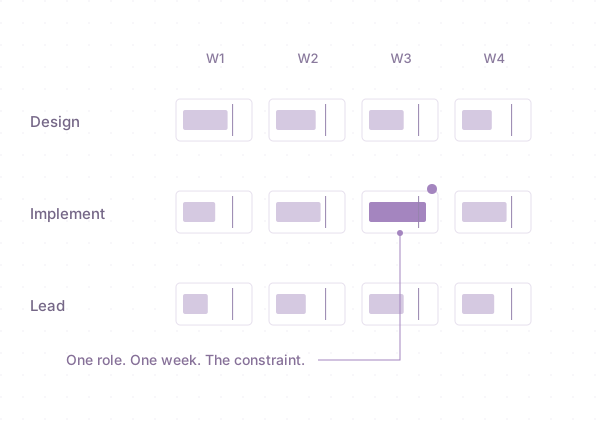
In Week 3, the team is at 85% load. Implementation needs 46 hours against 40 available. Spare design hours do not establish qualified implementation cover.
0–50 hours · vertical mark = effective capacity
Move 2 hours of preparation into Week 2 and 4 hours of documentation into Week 4. The same work stays with the same owners; dependencies and handoff timing still need confirmation.
If Week 3 implementation capacity falls from 40 to 32 hours, the proposed 40-hour schedule has an 8-hour gap. Reopen qualified coverage and delivery timing before treating the plan as feasible.
DELIVERY PORTFOLIO
Which roles are needed, in which weeks?
Translate committed projects and weighted pipeline into work by role and week.
View exampleFind the specific role and week that runs short, even when the team average looks healthy.
Test qualified assignments and timing changes while keeping dependencies and customer commitments visible.
Bring delivery delays, missing ownership, and capacity pressure into one accountable review.
A shared operating basis
Keep expected pipeline separate from committed work. Show the role, the week, and the dependency behind every constraint—then revisit the plan when availability changes.
Explore the platformThe first useful review
One team. One planning window. A delivery review built from reports you already run.

Welcome back
Sign in to continue to your operating workspace.
OpX access
Your account has access to more than one OpX workspace.
Choose one operating problem. We'll take it from there.
I will follow up directly to understand the operating problem and whether OpX is a fit for a first engagement.
First deployment
One operating question. One sponsor. The minimum authorized source package required to evaluate it.
Explore applications